Followers

Showing posts with label Alignment System. Show all posts

Wednesday, December 24, 2025

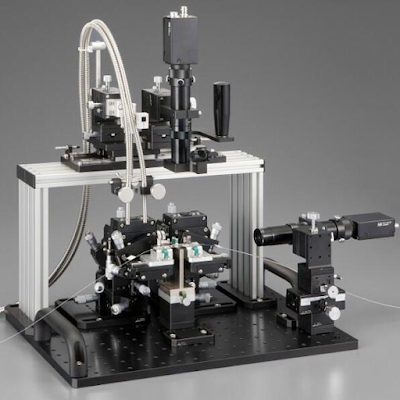
Understanding the Optical Fiber Alignment System


In today’s world, high-speed internet and seamless communication are made possible by the sophisticated technologies behind optical fiber systems. One critical aspect of these systems is the optical fiber alignment system a precise and essential technology that ensures the effective transmission of data through optical fibers. This system plays a pivotal role in maintaining the high performance and reliability of fiber optic networks.

What is an Optical Fiber Alignment System?

An optical fiber alignment system is a device or set of components used to position and align optical fibers so that light signals can travel with minimal loss. The system ensures that the core of each fiber is perfectly aligned, so light can be transmitted efficiently from one fiber to another. Even the smallest misalignment can cause significant data loss, signal degradation, or reduced transmission speeds.

These systems are essential during the process of fiber splicing, where two optical fibers are joined together, or during the assembly of fiber optic connectors. The precision with which the fibers are aligned directly affects the quality of the connection and, by extension, the performance of the entire optical network.

Why is Fiber Alignment Important?

1. Signal Integrity

Optical fibers work by transmitting light signals, which carry data over long distances. The alignment system ensures that the fibers remain in the correct position, allowing the light to pass through without interference. Misalignment can cause light to scatter or reflect, leading to signal loss and reduced performance.

2. Improved Performance

With proper alignment, optical fiber networks can maintain high bandwidth and low latency, which are essential for modern communication systems like high-speed internet, telecommunication, and data centers. The better the alignment, the less signal degradation occurs, improving overall performance.


3. Cost-Efficiency and Longevity

A well-aligned fiber system reduces the need for repairs and maintenance caused by poor connections or faulty splices. It helps increase the lifespan of fiber optic components, making it a more cost-effective solution in the long run.

Key Components of an Optical Fiber Alignment System

Precision Motors: These are used to fine-tune the positioning of fibers to ensure they are perfectly aligned.

Alignment Fixtures: Special tools or jigs hold the fibers in place during the splicing or connector assembly process.

Optical Sensors: These sensors detect the position of the fibers and help adjust them until they are optimally aligned.

Conclusion

An optical fiber alignment system is a crucial technology in the field of fiber optics, ensuring the reliable and efficient transmission of data across networks. By guaranteeing that optical fibers are precisely aligned, these systems help maintain the quality, performance, and longevity of fiber optic communication systems. As the demand for faster and more reliable internet continues to grow, the role of fiber alignment technology will only become more critical.

Next: PM Fiber Patch Cables: Precision Connectivity for Advanced Optical Networks

Friday, April 25, 2025

Optical Waveguide Alignment Systems Are Revolutionizing Next-Gen Communication Networks

Precision is crucial in the ever changing field of communication technology. The need for quicker, more dependable connections is only increasing, whether it is via 5G networks, high-speed internet, or data centres that fuel the cloud. The Optical Fiber Alignment System is a quiet but significant invention that is working behind the scenes.


An optical fibre alignment system: what is it?

A high-precision method for aligning optical fibres with nanometre accuracy is called an optical fibre alignment system. By ensuring that the cores of two fibres are precisely aligned, these systems reduce insertion loss and increase signal strength. Even the most sophisticated fibre networks will experience inefficient transmission in the absence of precise alignment.

Why is Alignment Important?

Networks are under more strain than ever before due to the exponential increase in data consumption—think video streaming, remote work, IoT, and AI. Accurately aligning optical components has a direct impact on:

Transmission Speed: Data transport may be slowed down by misalignment.

Signal Quality: Signal loss is decreased by precise alignment.

Network Reliability: Outages and error rates are increased by faulty connections.

Optical Waveguide Alignment System

The Optical Waveguide Alignment System goes beyond conventional alignment, which just considers fibres. It is intended to align integrated photonic waveguides as well as optical fibres, which are crucial parts of photonic chips that manage light-based data transfer on a micro scale.

These systems are necessary in:

Faster, smaller, and more energy-efficient circuits are made possible via silicon photonics.

In quantum computing, accuracy cannot be compromised.

Advanced Sensing: When photonic integration is needed in aeronautical or healthcare applications.

Optical Waveguide Alignment Systems are driving innovation in a variety of sectors by guaranteeing nearly flawless coupling between fibres and waveguides.


The foundation of tomorrow's communication infrastructure is made up of Optical Fiber Alignment System and optical waveguide alignment systems, which may enhance the quality of your video conversations and enable cutting-edge technologies like photonic chips and quantum computing.